


The First 30 Days in Germany for Students: Mastering the Bureaucracy Shock
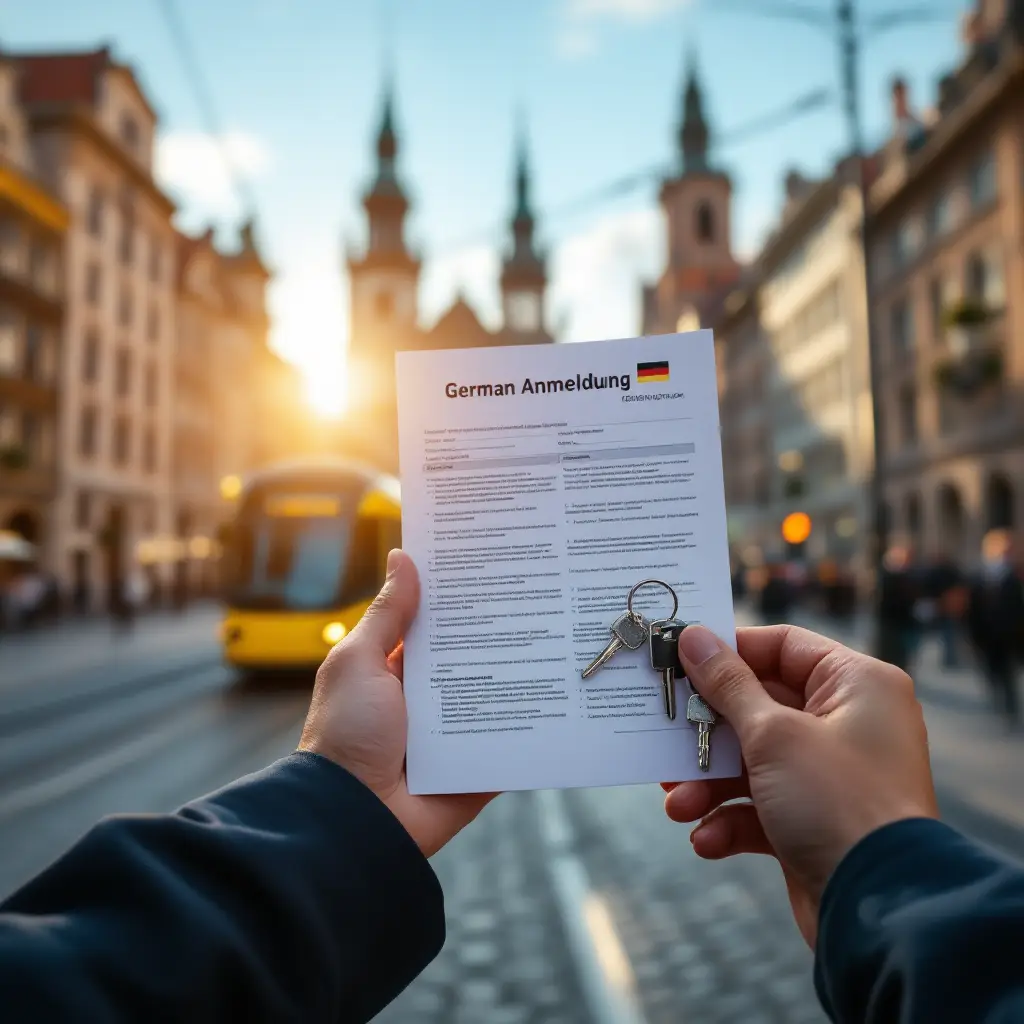
You’ve made it. You stepped off the plane at Frankfurt or Munich, breathed in the crisp German air, and realized your dream is finally real. But for most Indian students, the honeymoon period lasts exactly 24 hours. On Day 2, you realize that Germany is a land of paper, rules, and “Termine” (appointments).
In 2026, the digital shift is happening, but German bureaucracy still moves at its own pace. If you miss a deadline in your first month, it could affect your residence permit or your bank account. As your German Sathi, I’ve seen students lose weeks of sleep over a single missing letter. This 1,500-word guide is your survival manual for the first 30 days in Germany for students.
Day 1–7: The "Anmeldung" (City Registration) Marathon
In Germany, you don’t just live somewhere—you must legally register that you live there. This is called the Anmeldung.
The 14-Day Rule: By law, you must register within two weeks of moving into your permanent housing.
The “Wohnungsgeberbestätigung”: You cannot register without a signed document from your landlord. If you are staying in a hotel or a temporary “Zwischenmiete” that doesn’t provide this, you are in a legal grey area.
The Appointment (Termin): In cities like Berlin or Hamburg, getting an appointment at the Bürgeramt is like winning the lottery.
Sathi Tip: We help our students find “hidden” appointments or visit the office early in the morning to ensure they get registered on time. Without your Meldebescheinigung (registration paper), you cannot open a bank account or get a tax ID.
Day 8–14: Activating Your Blocked Account & Insurance
You have the money in your Sperrkonto, but you can’t spend it yet.
The Activation Process: Once you have your Anmeldung, you must upload it to your blocked account provider (Expatrio, Fintiba, or Coracle).
The German Bank Account: To receive your monthly €992, you need a local IBAN. While digital banks like N26 or Revolut are popular, some Foreigner’s Offices still prefer traditional banks like Sparkasse or Deutsche Bank.
Health Insurance Activation: Your “Incoming Insurance” was only for the visa. Now, you must activate your “Public Health Insurance” (TK, AOK, or Barmer). You will receive your Social Security Number (Sozialversicherungsnummer) via post—keep this safe!
Day 15–21: The "Rundfunkbeitrag" (The Infamous Radio Bill)
Welcome to the most hated bill in Germany. Every single household in Germany must pay the Rundfunkbeitrag (Public Broadcasting Fee), which is roughly €18.36 per month.
It’s not optional: Even if you don’t own a TV or a radio, you must pay.
The Letter: A few weeks after your Anmeldung, you will receive a letter from “ARD ZDF Deutschlandradio.” Do not ignore it.
The WG Rule: If you live in a shared flat (WG), only one person needs to pay for the whole apartment. If your roommate is already paying, you just need their “Beitragsnummer” to tell the authorities you are covered. We help our students set this up so they don’t get charged twice!
Day 22–30: The Tax ID and the Job Search
Even if you aren’t working yet, the Finanzamt (Tax Office) will automatically send you a Steuer-ID (Tax Identification Number) via post about 2–3 weeks after your registration.
Why you need it: You cannot get a “Werkstudent” job or even a part-time job at a café without this number.
The CV Shift: If you want to work in your first 30 days in Germany as a student, you need to convert your Indian CV into a “Tabellarischer Lebenslauf” (German-style resume). Germans value structure over flowery language.
Student Discounts & the ISIC Card
Your student status is a superpower in Deutschland. Use it during your first 30 days in Germany for students to save 50% or more on:
Mensa: The university canteen is the cheapest way to eat a warm meal (€3-€5).
Museums & Cinemas: Always ask for the “Studentenrabatt.”
Amazon Prime & Spotify: Students get massive discounts (or even 6 months free).
The ISIC Card: While your university ID works locally, an International Student Identity Card (ISIC) helps you save on flights and travel across Europe.
Mobility & The "Deutschlandticket"
In 2026, the Deutschlandticket is the king of travel. For a set monthly price, you get unlimited travel on all local buses, trams, and regional trains across the entire country.
Student Discount: Most universities include a “Semesterticket” in your fees, which is now often integrated with the Deutschlandticket.
The App: Download the “DB Navigator” app immediately. It is the only way to survive the German train system.
Getting a German SIM Card & Mobile Data
You cannot survive the first 30 days in Germany for students without reliable 4G/5G data for Google Maps.
Prepaid vs. Contract: As a new student, a prepaid SIM (like Aldi Talk or Lidl Connect) is the easiest to get.
Verification: By law, you must verify your identity via video call or at a post office (PostIdent).
Home Internet: Getting Wi-Fi in your room can take 2-4 weeks. During your first 30 days in Germany for students, we recommend getting a “Freenet Funk” or similar daily-unlimited SIM to stay connected until your home router arrives.
Managing Your Mental Health & Culture Shock
The first 30 days in Germany for students are emotionally draining. You will deal with:
“Behördenangst”: Fear of official letters and offices.
The Language Barrier: Even if your course is in English, the grocery store and the city office are in German.
Loneliness: Missing home-cooked food and family.
The Sathi Solution: We don’t just handle your papers; we are your community. We organize “Chai Meets” for our students so you can meet others who are going through the exact same struggle.
Supermarkets and the "Pfand" System: Saving Money on Day 1
During the first 30 days in Germany for students, your biggest daily expense will be food. To keep your budget under control, you need to know where to shop.
The Discounters: Aldi, Lidl, and Netto are your best friends.
The “Pfand” Secret: Never throw away your plastic or glass bottles! In Germany, you pay a deposit (Pfand) of €0.08 to €0.25 on almost every bottle. You can return these to machines at any supermarket to get your money back as a voucher. It sounds small, but over your first 30 days in Germany for students, this can save you enough for a week’s worth of groceries.
Sunday Closing: Remember, everything except some shops in train stations is closed on Sundays. Plan your grocery shopping accordingly!
Checklist for a Successful First Month
[ ] Signed rental contract & Landlord confirmation.
[ ] City Registration (Anmeldung) completed.
[ ] Blocked account activated & local bank account opened.
[ ] Health insurance card (eGK) ordered.
[ ] Tax ID received in the mail.
[ ] Radio bill registered (or shared).
[ ] Deutschlandticket/Semesterticket activated.
Conclusion: From "Foreigner" to "Resident"
By the end of your first 30 days in Germany as a student, the goal is to have your “Big Three” documents: Your Anmeldung, your Bank IBAN, and your Tax ID. With these, you are no longer just a visitor—you are a resident of the Federal Republic of Germany.
It sounds like a lot, but remember: Every successful professional in Germany today started exactly where you are standing now.
[…] ] Tax ID (Steuer-ID) received from the […]